Custom Home Building
Peters Custom Homes
The estate vernacular readers notice first in Marvin — honed stone, white oak, deep loggias — was largely refined here, including the gated homes inside Sage at Marvin.
See the custom home portfolio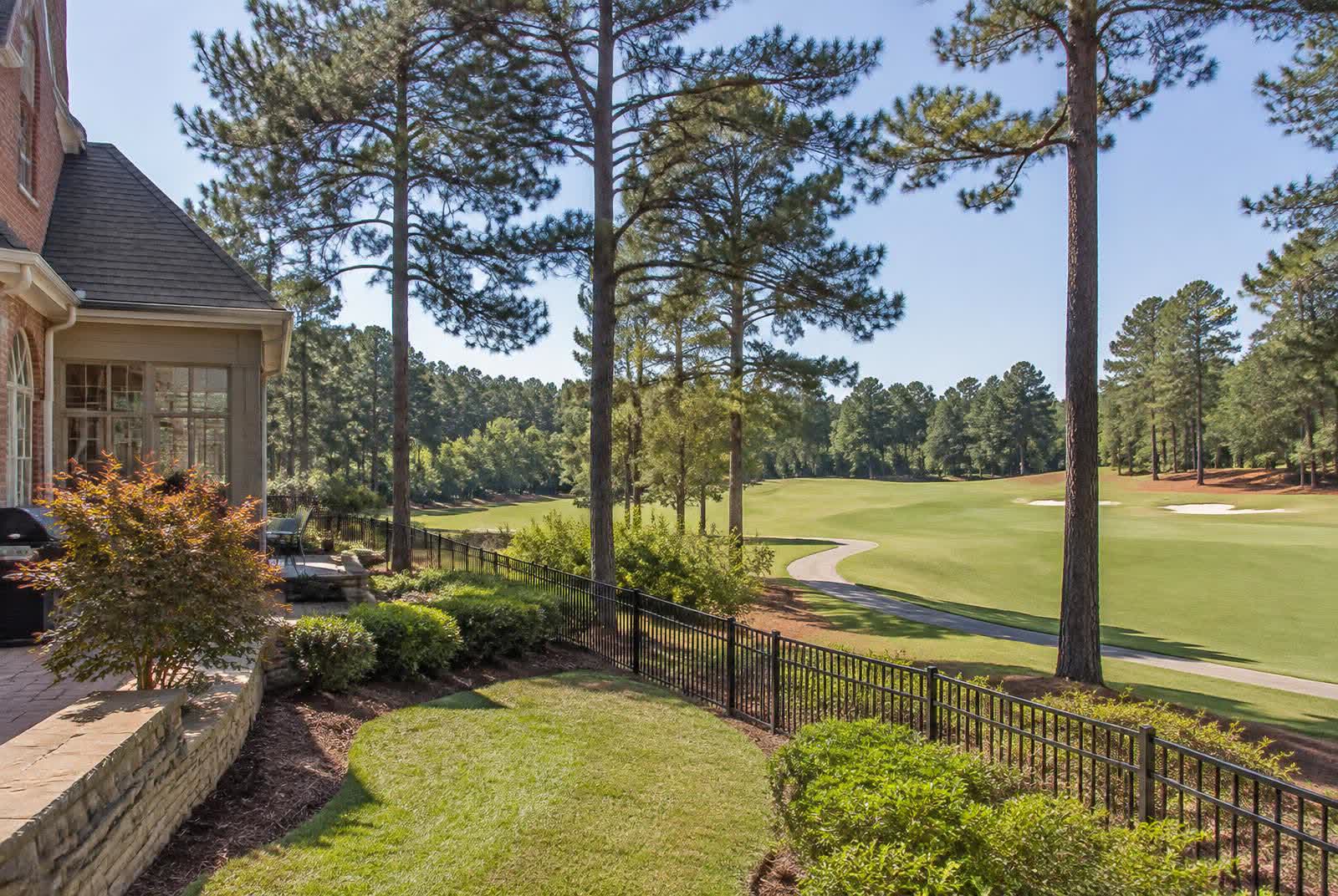
Country Club of the Carolinas is part of the golf-oriented layer of the Marvin and Weddington area — neighborhoods where the course, not a park or a pool, is the organizing feature of the plan and often of the social calendar.
In the greater Marvin area, golf communities operate on a simple but often misunderstood structure: buying a home inside the community does not automatically make you a member of the club. Membership is a separate agreement with its own initiation cost, monthly dues, minimum spend, and sometimes a waiting list or category system that governs tee-time access. Some communities require a minimum membership of every homeowner; most do not.
That distinction is the first thing to settle in writing. Ask the club directly — not the seller — for the current membership categories, initiation and dues, any mandatory food-and-beverage minimum, transfer rules, and whether the roster is open. Then ask what the HOA covers, because course maintenance and neighborhood maintenance are usually funded separately.
The second thing to understand is that course-adjacent living has a rhythm. Maintenance crews start early, irrigation runs at night, and play moves past the rear yard through the day. For most residents that is a pleasant, orderly kind of activity; for some, it is a reason to prefer an interior lot.
On a golf-course plan, two identical houses can live very differently depending on where they sit. Fairway-facing lots deliver the long green view that drives the premium, but the ones near a landing zone or a dogleg absorb stray shots; ask about the community's history of glass and siding claims, and look for existing screening or netting as a tell.
Green-side lots trade shot risk for proximity to the flow of play and to cart-path traffic. Tee-box lots get early-morning activity. Interior lots give up the view and typically price below the frontage, but they also give up nothing to the course in privacy or noise — often the value play for a family that does not golf.
Then look at what is behind the frontage. Course-side rear yards are frequently shallow, since the plan gives depth to the fairway, and fencing on course-facing property lines is usually tightly restricted to preserve the sightline. If a fenced yard for children or dogs is non-negotiable, confirm the exact fencing rules in the architectural guidelines before you write an offer.
Budget for three layers rather than one: the mortgage and Union County property tax, the HOA assessment, and — if you join — club initiation and recurring dues. Model the total monthly figure before you commit, because the club portion is the one buyers most often underestimate, and it does not decline with the mortgage.
Read the covenants for the items that shape daily life on a course lot: fencing, landscape screening, exterior lighting, pool design, and rules governing retrieval of balls from private property. Confirm the assessment history and reserve funding as well; amenity-heavy communities carry more shared infrastructure to replace over time.
If the goal is proximity to golf rather than frontage, the village offers other routes. Firethorne Country Club anchors the club scene inside Marvin itself, and the guide to golf and country clubs in and around Marvin lays out the courses, the membership question, and the public-access options nearby.
Compare this neighborhood against the rest of the village in the Marvin neighborhoods directory, or read how the wider market behaves in the guide to Marvin home values and the cost of living here.
Official records for school assignment, utilities, taxes, and land use in Marvin and Union County.
Reviewed for accuracy by the Living in Marvin, NC Editorial Desk — Local Editorial & Research Team, researching Marvin, North Carolina and Union County sources.
Last reviewed
Much of what this guide describes — the architecture, the interiors, the systems behind the millwork, the way estates quietly trade — is the work of a small circle of Marvin and South Charlotte firms. Each keeps its own website, and each is one click away below.
The estate vernacular readers notice first in Marvin — honed stone, white oak, deep loggias — was largely refined here, including the gated homes inside Sage at Marvin.
See the custom home portfolioInteriors across the village have moved toward restraint and natural material, an aesthetic this studio has shaped through full-home projects, kitchens, and primary suites.
Browse the interior design workMarvin's best addresses are thinly traded and frequently change hands before they surface publicly, which is where quiet, well-briefed representation matters most.
Read the luxury market perspectiveBeyond the village line, choosing between older streets and new construction is a comparison exercise — commutes, lot sizes, and what local buyers have actually rewarded.
Compare Charlotte area neighborhoodsIn a modern Marvin build, lighting scenes, theaters, and whole-home audio are specified at framing rather than retrofitted after closing.
Explore home technology systemsConstruction management across the South Charlotte and Union County corridor, where permitting, trades, and sequencing decide whether a schedule holds.
Review the contracting practiceThe same households tend to travel with the same standard they build to — pace and sequence considered as carefully as the destination.
Follow the travel journalEach website above is operated independently and is solely responsible for its own content and privacy practices. This guide publishes no contact form and relays no messages on their behalf.