Custom Home Building
Peters Custom Homes
The estate vernacular readers notice first in Marvin — honed stone, white oak, deep loggias — was largely refined here, including the gated homes inside Sage at Marvin.
See the custom home portfolio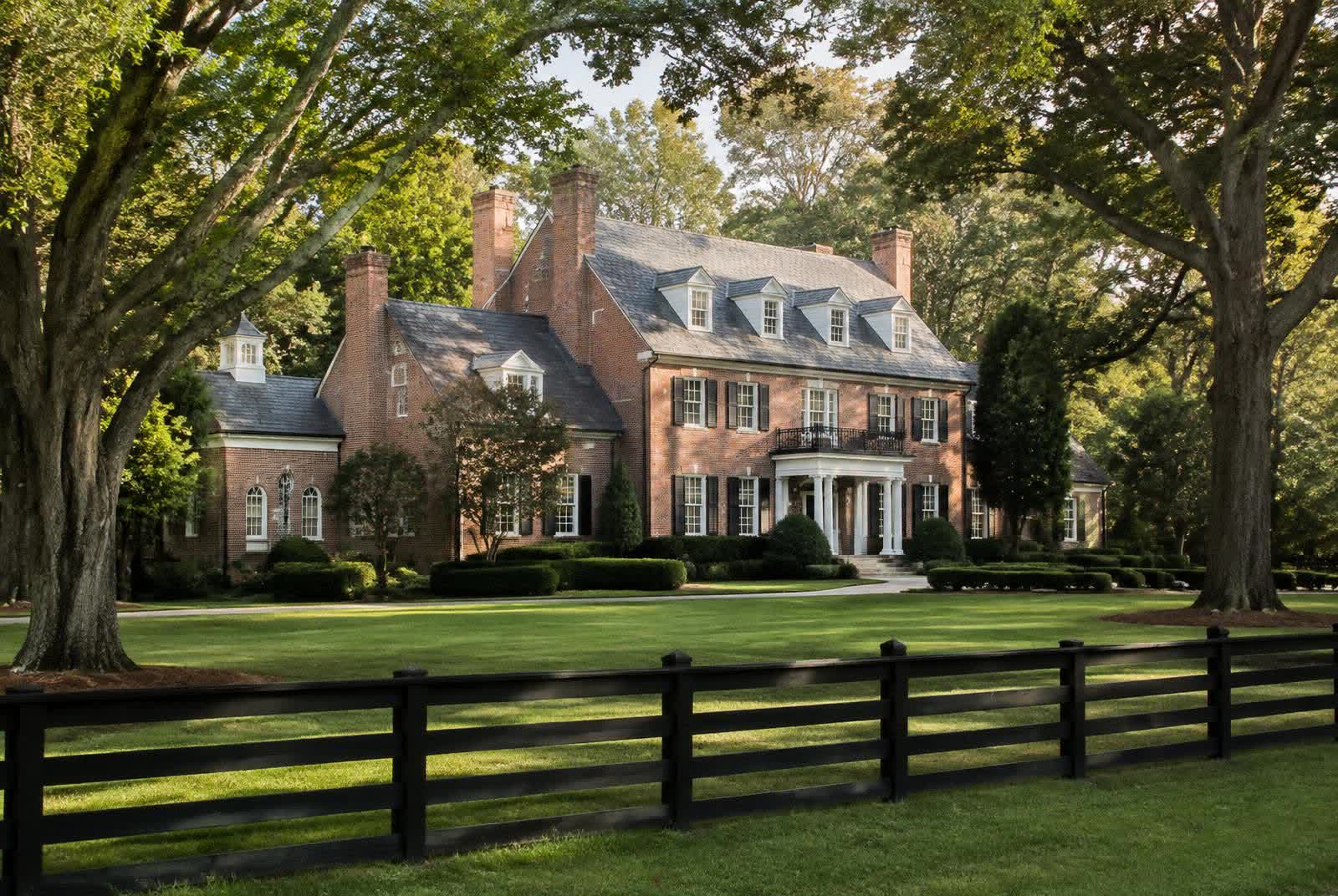
The Chimneys of Marvin belongs to the older, larger-lot layer of the village — the estate-acreage pattern that existed before Marvin's gated communities arrived, and the reason the village still reads as pasture and hardwood rather than as subdivision.
Marvin incorporated in 1994 specifically to control density as Charlotte's growth reached the Union County line, and large minimum lot sizes have been central to its planning ever since. Neighborhoods like The Chimneys of Marvin are the built expression of that policy: fewer homes, more ground between them, and streets that feel like country roads with houses set back behind lawn and trees.
Buying on an estate lot in Marvin is a different exercise from buying in a gated community. There is usually less shared amenity and less uniformity — no pool or clubhouse, no single builder's palette — and more variation from one property to the next in age, architecture, and condition. The premium is space and privacy, and the cost is that you own and maintain all of it.
That also changes the resale calculus. Estate parcels in Marvin trade on land as much as on the house: buyers pay for the acreage, the tree canopy, the topography, and the buildable envelope. A dated house on a beautiful parcel often clears the market; a beautiful house on a compromised parcel is harder.
Start with the survey. You want the recorded plat, the boundary lines walked, and every easement identified — utility, drainage, access, and any shared-driveway arrangement. On multi-acre Marvin lots, drainage easements and creek buffers frequently cross the rear of the property and restrict what can be built there.
Then water and wastewater. Many older large-lot properties in the village are on private wells and septic systems. For a well, ask for recent potability and flow testing. For septic, obtain the permit and the system layout from Union County Environmental Health, confirm the tank's last pump date, and — critically — confirm the location of the drain field and repair area before planning a pool, a detached garage, or an addition.
Third, trees and slope. Mature hardwoods are the reason these parcels feel the way they do, and they are also a maintenance obligation: crown health, deadwood over the roofline, and root proximity to the foundation all matter. Slope determines grading and drainage cost on any future project, and in the Piedmont's clay soils water management is the difference between a dry crawl space and a recurring problem.
Practically, estate-lot living in Marvin means a car-based routine and a quiet one. There is no walk-to-coffee scenario here; there is a greenway system, Marvin Efird Park, and country roads that cyclists and runners use in the early morning. Trash, deliveries, and school buses all function normally, but nothing is close, and that is the point.
Neighborhoods of this type in Marvin usually still carry recorded covenants, even without an amenity package. Expect architectural review over fencing, outbuildings, and exterior materials, and read the covenant language on livestock, horses, and accessory structures if any of those matter to your plans — the answers vary enclave to enclave and are not implied by the acreage.
For the broader picture of what the village permits and how a custom build proceeds here, the guide to custom homes in Marvin walks through lot evaluation, village zoning, HOA architectural review, and Union County permitting in sequence.
Compare this neighborhood against the rest of the village in the Marvin neighborhoods directory, or read how the wider market behaves in the guide to Marvin home values and the cost of living here.
Official records for school assignment, utilities, taxes, and land use in Marvin and Union County.
Reviewed for accuracy by the Living in Marvin, NC Editorial Desk — Local Editorial & Research Team, researching Marvin, North Carolina and Union County sources.
Last reviewed
Much of what this guide describes — the architecture, the interiors, the systems behind the millwork, the way estates quietly trade — is the work of a small circle of Marvin and South Charlotte firms. Each keeps its own website, and each is one click away below.
The estate vernacular readers notice first in Marvin — honed stone, white oak, deep loggias — was largely refined here, including the gated homes inside Sage at Marvin.
See the custom home portfolioInteriors across the village have moved toward restraint and natural material, an aesthetic this studio has shaped through full-home projects, kitchens, and primary suites.
Browse the interior design workMarvin's best addresses are thinly traded and frequently change hands before they surface publicly, which is where quiet, well-briefed representation matters most.
Read the luxury market perspectiveBeyond the village line, choosing between older streets and new construction is a comparison exercise — commutes, lot sizes, and what local buyers have actually rewarded.
Compare Charlotte area neighborhoodsIn a modern Marvin build, lighting scenes, theaters, and whole-home audio are specified at framing rather than retrofitted after closing.
Explore home technology systemsConstruction management across the South Charlotte and Union County corridor, where permitting, trades, and sequencing decide whether a schedule holds.
Review the contracting practiceThe same households tend to travel with the same standard they build to — pace and sequence considered as carefully as the destination.
Follow the travel journalEach website above is operated independently and is solely responsible for its own content and privacy practices. This guide publishes no contact form and relays no messages on their behalf.