Luxury Custom Home Builder
Peters Custom Homes
Designs and builds one-of-a-kind custom estates across the Charlotte area, from lot evaluation and plans through construction and closeout.
Visit Peters Custom Homes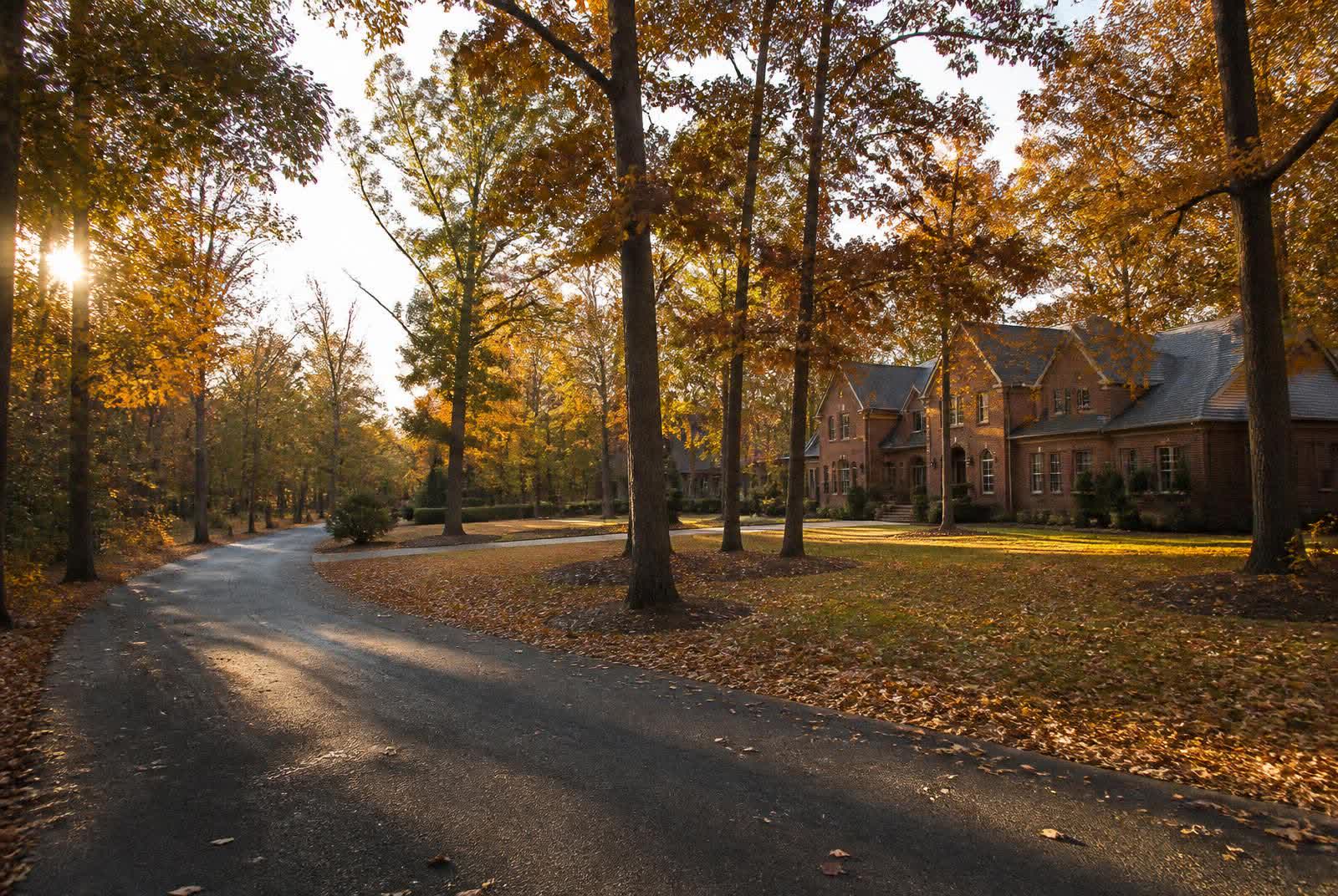
Four real seasons, none of them extreme. Here is what the Piedmont climate actually delivers in Marvin — the humidity, the storms, the two perfect months everyone plans around, and the one winter hazard that matters.
Marvin sits about 600 to 700 feet above sea level in the rolling North Carolina Piedmont, roughly 180 miles from the Atlantic and about 100 miles east of the Blue Ridge escarpment. That geography is why the climate is comfortable: far enough inland to avoid coastal storms, far enough south to keep winters brief, and high enough to escape the oppressive stagnant heat of the coastal plain.
Precipitation is spread fairly evenly across the year — roughly the mid-40-inch range annually for the Charlotte area — and arrives as frontal rain in winter and spring and as convective thunderstorms in summer. Snowfall averages only a few inches per season, and much of that comes in a single event.
Approximate climate normals for the Charlotte-area Piedmont, rounded. Individual years vary; check the National Weather Service Greer/ Charlotte office for current forecasts and official records.
The village's signature season. Marvin's mature hardwoods, dogwoods, and azaleas make the greenways and neighborhood streets genuinely scenic, and temperatures sit in the comfortable 60s and 70s for weeks. The tradeoff is pollen: tree pollen in late March and April is heavy across the Piedmont.
Hot, humid, and thunderstorm-prone. Outdoor activity shifts to early morning and evening, pools and shaded greenway sections get heavy use, and afternoon storms build quickly and pass fast. Late August can turn dry, which is when irrigation and new landscaping need attention.
Long, dry, and mild — arguably the best stretch of the year. Humidity drops, evenings cool, Friday-night high school football takes over the calendar, and hardwood color peaks from late October into early November.
Short and manageable. Daytime highs commonly reach the 50s, overnight lows dip below freezing, and the significant weather risk is ice rather than snow. Golf and trail use continue through most of the season on mild days.
Weather shapes how residents use the village. The greenways and parks and trails see their heaviest traffic in April, May, October, and November. Golf plays nearly year-round, with the summer tee sheet front-loaded into early morning. Patio dining across Waxhaw, Waverly, and Ballantyne runs from March into November.
For newcomers, two practical notes. First, the pollen season in late March and April is genuinely intense in a village this heavily wooded. Second, ice — not snow — is what closes Union County schools and makes the two-lane roads around Marvin difficult; a light glaze on Providence Road matters more than four inches of powder ever would.
Official meteorological sources for the Marvin and greater Charlotte area.
Reviewed for accuracy by the Living in Marvin, NC Editorial Desk — Local Editorial & Research Team, researching Marvin, North Carolina and Union County sources.
Last reviewed
This guide is connected to the Peters family businesses below. If you are building, furnishing, buying, or selling a home in Marvin, each one is a single click away.
Designs and builds one-of-a-kind custom estates across the Charlotte area, from lot evaluation and plans through construction and closeout.
Visit Peters Custom HomesBuilds finished luxury homes on speculation — designed and completed ahead of a buyer, for households who want a new home without managing a custom build.
Visit Peters Signature HomesA Charlotte interior design studio led by Miriam Peters, working on custom homes, renovations, and new construction — finishes, furnishings, and full-home interiors.
Visit Emerald & Oak DesignPrivate luxury real estate representation for buyers and sellers, led by Nicholas and Miriam Peters, focused on the upper end of the Charlotte-area market.
Visit Peters & Associates luxury real estateResidential buying and selling across Charlotte and Lake Norman, with a home search and home-valuation tools — the broader-market side of the Peters real estate practice.
Visit The Peters TeamHome theaters, smart-home control, lighting, whole-home audio, networking, and security — best planned during design so wiring is in place before drywall.
Visit Peters Audio VideoLuxury travel guides, hotel reviews, and destination insights. A travel publication, separate from the home and real estate businesses above.
Visit Peters Signature TravelThese are Peters family businesses. This guide is published by the same family, so treat these as our own services, not independent recommendations.