Summer in Marvin: Thunderstorms, Shaded Acres, and Morning Rhythms
From dawn trail walks to torrential afternoon thunderstorms, summer in Marvin brings a distinct seasonal rhythm shaped by mature tree canopy and Carolina Piedmont humidity.
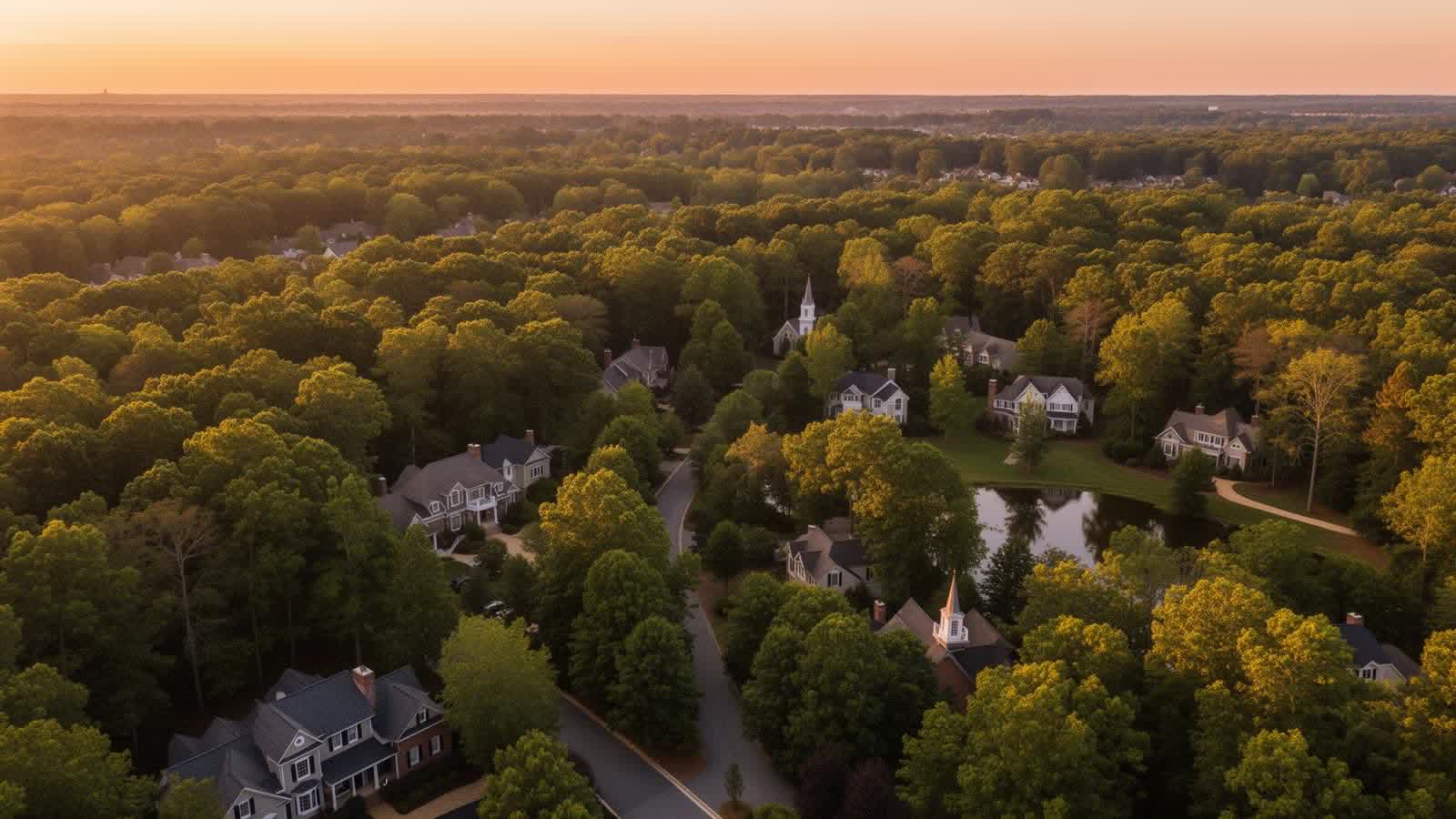
When high summer settles over the Carolina Piedmont, life in the Village of Marvin shifts into a deliberate, time-tested cadence. Midday heat in Union County carries an unmistakable weight, with dew points regularly climbing into the muggy seventies and high temperatures hovering well into the nineties. For residents of this low-density enclave, summer in Marvin is defined not by retreating entirely indoors behind conditioned air, but by recalibrating daily life around the solar arc, the protective shade of mature hardwoods, and the inevitable drama of late-afternoon thunderstorms.
The Rhythm of Summer in Marvin: Dawn Patrols and Canopy Shade
The daily clock in Marvin starts noticeably earlier between June and August. Long before the sun cuts through the dense humidity, the village stirs in the quiet blue light of dawn. Between six and eight in the morning, neighborhood streets and multi-use paths see their peak activity for the day. Walkers, runners, and cyclists claim the pavement while ambient temperatures remain in the low seventies, taking advantage of the brief window before the Carolina sun begins baking the asphalt.
This early-morning migration is particularly visible around Marvin Efird Memorial Park, where the community gardens, open pasture edges, and wooded trails offer a peaceful retreat before the heat builds. Unlike the heavily paved commercial corridors just north across the Mecklenburg County line in Ballantyne or south along Highway 16 toward Waxhaw, Marvin benefits directly from its strict residential land planning. The village's commitment to low-density zoning, generous lot requirements, and woodland preservation creates a microclimate that behaves differently from surrounding suburban centers.
Throughout the morning, that difference is tangible:
- Extensive tree canopies: Established stands of white oak, sweetgum, and loblolly pine filter incoming solar radiation, keeping ground-level temperatures several degrees cooler than unshaded commercial plazas.
- Substantial acreage per home: Open green space, grass pastures, and deep setbacks prevent the heat-island effect common to denser developments across South Charlotte.
- Equestrian routines: Horse owners across Marvin and bordering pastoral pockets of Weddington begin turnout, feeding, and barn chores at first light, wrapping up heavy livestock tasks before the midday swelter forces animals into shaded run-ins or stall fans.
By ten in the morning, the window closes. The humidity thickens, cicadas begin their rhythmic drone from the treetops, and outdoor life naturally recedes under porch roofs, arbor covers, and the dense shade of backyards.
Piedmont Heat and the Afternoon Storm Cycle
To understand summer in the southern Piedmont is to understand convective weather. While mornings in Union County often dawn with tranquil, cloudless skies, the relentless solar heating of moisture-rich air off the Atlantic and Gulf of Mexico sets up an atmospheric pressure cooker by early afternoon.
By two or three o'clock, cumulus clouds begin their vertical climb, stacking into towering anvil-topped storm cells over the rolling terrain. These are not broad, organized frontal systems, but localized pop-up thunderstorms. On any given afternoon, a torrential deluge might submerge driveways along Tom Short Road or Waxhaw-Marvin Road, while properties barely two miles away toward Weddington remain completely dry under blazing sunshine.
When an afternoon cell does track directly over the village, the arrival is theatrical. The ambient temperature can plummet fifteen to twenty degrees in a matter of minutes as the storm's downdraft hits. Dense wall clouds cast a slate-gray dusk over the treetops, followed by sudden wind gusts that test the resilience of mature willow oaks and river birches. Lightning across the open pastures of Union County is sharp and immediate, echoing across residential acreage with heavy resonance.
These storms deliver an astonishing volume of water in short bursts. Marvin's rolling topography and roadside swales guide sheets of runoff toward regional creeks like Six Mile Creek and Little Twelve Mile Creek. For village residents, maintaining clear culverts, stable gravel paths, and proper yard grading is an essential annual discipline. Within forty-five minutes, the squall typically exhausts its energy, leaving behind dripping forest canopies, mist rising off warm roadways, and the fresh, ozone-tinged scent of petrichor.
Adapting Outdoor Living to Summer in Marvin
Rather than surrendering the outdoors for three months, households in Marvin adapt their environments to match the regional climate. Architectural choices across the village frequently reflect this seasonal reality. Expansive screened porches—often equipped with oversized ceiling fans, beadboard ceilings, and outdoor fireplaces for cooler months—function as primary living rooms throughout the summer.
Screens are indispensable in Union County, providing protection against the midsummer emergence of mosquitoes, gnats, and horseflies without obstructing evening breezes. In many homes, shaded outdoor kitchens and covered verandas become the evening gathering point once the sun slips behind the treeline. Even after a storm clears, the air remains thick, but the dropping angle of the sun brings a welcome stillness to large residential lots.
This seasonal lifestyle also informs how residents approach yard care and native landscaping. Summer maintenance shifts away from midday chores toward quiet evening tasks:
- Water conservation: Lawns of Bermuda or Zoysia enter their peak growth phases and tolerate heat well, while fescue lawns enter summer dormancy and require careful watering schedules to survive fungal pressure.
- Native plantings: Properties that incorporate native Piedmont perennials—such as purple coneflower, black-eyed Susan, and Joe-Pye weed—thrive during dry stretches between cloudbursts, drawing hummingbirds and native pollinators to perimeter borders.
- Hardscape management: Patios made of light-colored natural stone or pavers stay remarkably cooler underfoot than unshaded dark decking, extending daytime usability in woodland backyards.
Navigating Weather Disruptions in 28173
The intensity of Piedmont summer squalls carries practical realities. Thunderstorms frequently bring down isolated tree limbs across secondary utility easements, leading to occasional localized power blinks. Village households commonly prepare with backup battery systems for electronics, surge suppression, and seasonal inspections of tree limbs overhanging roofs and overhead utility runs.
Travel during these afternoon squalls requires vigilance. Sudden downpours can drastically reduce visibility along two-lane connectors like New Town Road, Marvin Road, and Rea Road Extension, where heavy leaf litter and standing water occasionally accumulate in low shoulders before drainage networks catch up. Experienced drivers learn to pause at local commercial hubs in Waxhaw or Blakeney until the primary squall line sweeps through.
The Transition Toward Late Summer
As July gives way to August, the dog days settle in with persistent tenacity. The lush green foliage that arrived in April deepens into a dark, dusty jade, weighted by red clay dust and late-season growth. Yet even in the deepest heat of late summer, the landscape possesses a grounded, resilient character unique to this corner of the state.
Looking ahead toward September, the subtle shift begins. Nighttime lows will slowly dip back into the comfortable sixties, the afternoon storm frequency will ease, and the canopy covering the Village of Marvin will prepare for its brilliant autumnal turn across Union County.